
How to Write A Novel
The author shares the secret to his future success

Learning to write is like learning to drive. Once you’ve got the basics down, avoid solid objects and squishy pedestrians and call it good. As substacker Jack Baruth will tell you, racing is another story.
Victory on the track requires humility, courage, determination, persistence, patience, practice and a sense of humor. Same goes for being a professional writer. Or even a good writer.
So now you know. So why do aspiring writers and curious readers get so hung up on “process.” Where do you get your ideas? Can you write when you’re high?
As my fiction (but not fictional) editor Rob Patterson likes to say, who gives a shit? Sit down and write, using whatever process works for you. That said, there are two basic schools of thought when it comes to novel writing.
Some writing coaches advise wannabe novelists to plow through the entire book without looking back. Create a complete rough draft then go back and edit.
Strangely, these are often the same experts who recommend complete character studies (including dietary restrictions) and a comprehensive plot outline before putting proverbial pen to paper.
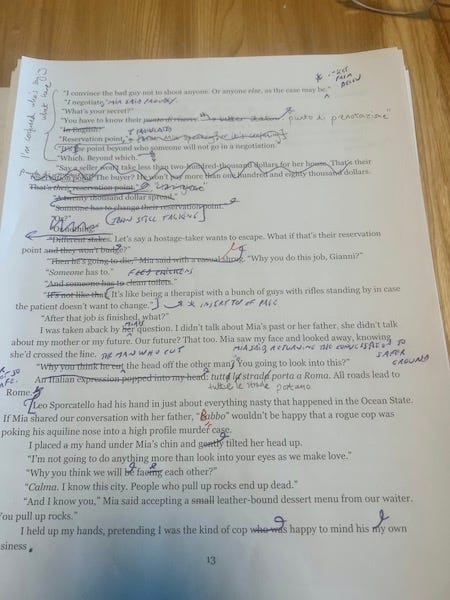
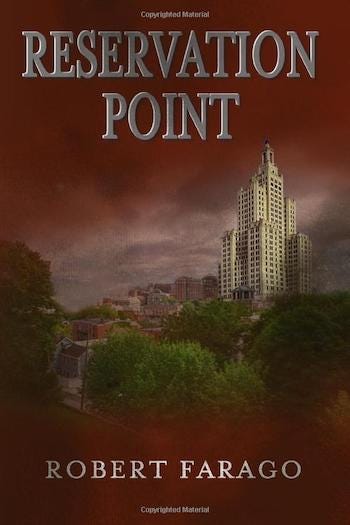
#notmyjam. I started Reservation Point with the image of two cops watching a man throw a severed head in a trash can.
I had no idea who was who or what was what. I made shit up as I went along, polished each chapter to perfection before the next, then edited the entire book – acknowledging that my perfect prose was, in fact, crap.
This dichotomy reminds me of the two basic ways to get to get to grips with a high-performance sports car.
One: jump in, stomp on the gas and thrash it. It isn’t pretty. You might crash. But the “scruff-of-the-neck” technique yields mucho macho mastery over the beast (or death and destruction).
Two: start slowly and gradually increase your speed as you get the machine’s measure. It isn’t particularly exciting. You might be called a pussy. But you’re far less likely to be taken by surprise when the sports car reveals its “quirks.”
Applied to novel writing, the stomp ‘n go approach (e.g., bang-out the whole thing without stopping) reduces the anxiety writers feel when contemplating a literary mountain whose summit is shrouded in mist.
The slowly-gently-now-a-little-faster approach embodies the “longest journey starts with a single step” shtick. Focusing on the present and letting the summit take care of itself also relieves pressure.
Either way, Jose. Meanwhile, process-curious observers tend to fixate on the writing discipline (or lack thereof). Do you write a specific number of words a day? Do you set aside a particular time of day? Do you wait until inspiration strikes? How do you deal with writer’s block?
Those who know me – squirrel! – will scoff at any suggestion that I have hard and fast rules for sustained keyboarding. All I know is that writing is, for me, like a bowel movement. I can’t not write. I may produce what you’d expect from a mandatory excretory function, but the blank page is my friend. Once I figure out the first sentence.
Whether it’s the first sentence of a chapter or the entire book. I reckon the opening salvo is the greatest challenge for me and, by extension, every novelist who ever lived.
I always opt for a short declarative sentence. It plants the flag for all that follows, establishes the tone, lets the reader “warm up” and sets both of you on your merry way. Call me Ishmael.
You’ve got to get that first sentence right. How do you know if you haven’t? You come to a dead end. It could be a page later. It could be several chapters later. If so, start over.
I hit so many dead ends on Breaking Point (RP’s sequel) it took me six multi-chapter starts and over a year to finally get in gear. [FYI: “Rookies are a dangerous breed.” How appropriate is that – especially for literary agents.]
That pretty much answers the question posed by the headline. You write a novel like you eat an elephant: one bite at a time, starting with the first bite. If it tastes bad and/or you recognize the result as vomit (instead of literary genius), choose another metaphorical elephant and try again.
Remember: the only failure in life is to stop trying. That and thinking you can beat Jack Baruth on a race track.